
Modern industrial systems depend on electrical cables that can perform consistently under demanding operating conditions. From automated production lines and control cabinets to industrial machinery, power distribution systems, robotics, transportation equipment, and high-temperature processing environments, cable selection directly influences electrical reliability, installation efficiency, equipment performance, and long-term operating costs.
Unlike standard cables designed for general-purpose applications, specialty cables are developed around specific performance requirements. These may include resistance to heat, oil, chemicals, abrasion, moisture, vibration, mechanical stress, electromagnetic interference, or continuous flexing. UL-standard cables add another important consideration for projects where recognized safety and construction requirements are part of the specification.
For manufacturers, system integrators, contractors, distributors, and industrial purchasing teams, understanding the differences between specialty, UL-standard, and high-temperature cables makes it easier to match cable construction with the actual working environment.
Why Industrial Cable Selection Matters
An industrial cable is more than a conductor surrounded by insulation. Its conductor material, insulation system, shielding, jacket, temperature rating, voltage rating, flexibility, construction, and applicable certifications all affect how it performs in a particular application.
A cable installed in a stationary control panel may experience very different conditions from one used on a moving robotic arm. Similarly, a cable routed near a furnace, oven, heating element, or industrial processing line may require substantially greater temperature resistance than a cable installed in a temperature-controlled office environment.
Selecting a cable based only on conductor size or voltage can therefore leave important performance requirements unaddressed.
A more complete evaluation considers:
- Operating temperature
- Voltage and current requirements
- Installation environment
- Mechanical movement
- Chemical and oil exposure
- Moisture and humidity
- Abrasion and impact
- Shielding requirements
- Flexibility
- Flame and fire performance
- Applicable industry standards
- Installation method
- Expected service life
This approach helps engineers and purchasing teams select cables according to actual application conditions rather than relying solely on general specifications.
What Are Specialty Cables?
Specialty cables are designed for applications where ordinary electrical cables may not provide the required combination of electrical, mechanical, environmental, or thermal performance.
The term “specialty cable” covers a broad range of products. Depending on the application, a specialty cable may incorporate advanced insulation materials, specialized jackets, shielding layers, reinforced construction, flexible conductors, or customized configurations.
Common specialty cable applications include industrial automation, robotics, instrumentation, control systems, manufacturing equipment, medical equipment, transportation systems, renewable energy installations, and other technically demanding environments.
For example, an automated machine with moving components may require a highly flexible cable capable of repeated bending. A cable installed around industrial machinery may need enhanced resistance to oil and abrasion. A sensitive signal system may require shielding to help reduce electromagnetic interference.
The key advantage of specialty cables is application-specific performance. Instead of treating every installation as a general-purpose electrical environment, engineers can choose cable construction based on the conditions the cable is expected to encounter.
Understanding UL-Standard Cables
UL standards are an important consideration in many North American electrical and industrial applications. Underwriters Laboratories develops safety standards and certification programs covering numerous products and systems.
When a project specifies UL-recognized or UL-listed cable, it is important to verify the exact cable designation and applicable standard rather than assuming that all cables described as “UL standard” have identical characteristics.
Different cable constructions may be intended for different installation methods, equipment types, temperature ranges, voltage levels, or environmental conditions.
For procurement teams, the practical lesson is simple: match the cable certification and construction to the project’s actual specification.
Important details to confirm may include:
- Applicable UL standard
- Cable type or designation
- Voltage rating
- Temperature rating
- Conductor construction
- Insulation material
- Jacket material
- Flame performance
- Intended installation method
- Manufacturer documentation
Proper verification can make purchasing more efficient and reduce the risk of selecting a cable that does not meet the requirements of the final installation.
Why High-Temperature Cables Are Important
Temperature is one of the most important environmental factors affecting cable performance.
Every cable has a defined operating temperature range. When a cable is exposed to temperatures above its intended rating, insulation and jacket materials may experience accelerated aging. Over time, excessive thermal stress can affect flexibility, dielectric performance, mechanical properties, and overall cable service life.
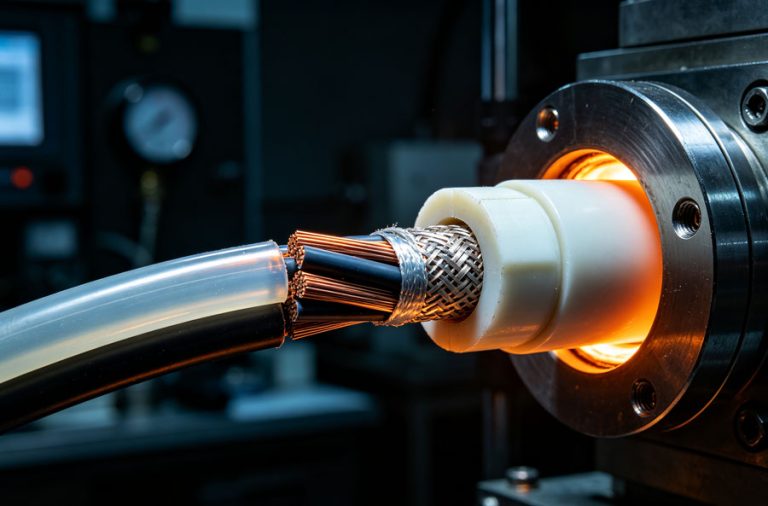
High-temperature cables are designed with materials and construction methods suitable for environments where elevated temperatures are expected.
Typical applications may include:
- Industrial ovens
- Furnaces
- Heat-treatment equipment
- Glass processing
- Steel manufacturing
- Ceramic production
- Industrial heating systems
- Engine compartments
- Power-generation equipment
- High-temperature machinery
- Specialized automation equipment
The appropriate cable depends on the actual temperature profile of the installation. Engineers should consider both continuous operating temperature and temporary or peak temperatures.
Continuous Temperature Versus Peak Temperature
One common mistake during cable selection is focusing only on the highest temperature that may occur.
A cable exposed to a short-duration temperature spike may face different conditions from a cable operating continuously at an elevated temperature.
For this reason, cable selection should consider:
Continuous operating temperature: The temperature the cable is expected to experience during normal operation.
Peak temperature: The highest temperature the cable may encounter for a limited period.
Ambient temperature: The surrounding environmental temperature before considering heat generated by the conductor itself or nearby equipment.
Conductor temperature: The temperature reached inside the cable during operation, which can be affected by electrical load and installation conditions.
These factors should be evaluated together when determining whether a high-temperature cable is suitable for an application.
Cable Materials Make a Major Difference
Cable performance depends heavily on material selection.
Conductors are commonly made from copper or other conductive materials, while insulation and jacket systems can be manufactured from a variety of polymers, elastomers, fluoropolymers, thermoset materials, and other specialized compounds.
Different materials provide different advantages.
Some insulation systems are selected for flexibility, while others are designed for elevated temperatures. Certain jacket materials offer improved resistance to oils, chemicals, moisture, abrasion, or mechanical stress.
For high-temperature environments, material stability becomes especially important. A suitable insulation system must maintain the necessary electrical and mechanical characteristics throughout the expected operating temperature range.
This is why comparing cables solely by conductor size can be misleading. Two cables with similar electrical specifications may behave very differently in demanding environments because of differences in insulation, jacket, shielding, and construction.
Specialty Cables for Industrial Automation
Industrial automation has created increasingly sophisticated cable requirements.
Modern production equipment can include sensors, servo motors, programmable controllers, vision systems, robotic arms, variable-frequency drives, and high-speed communication networks. These systems may require multiple cable types operating together in a relatively small installation area.
Automation cables may need to handle:
- Continuous movement
- Repeated bending
- Torsion
- Vibration
- Electromagnetic interference
- Oil exposure
- Tight bending radii
- High-speed machine cycles
For robotic and dynamic applications, cable flexibility is particularly important. A cable that performs well in a stationary installation may not be appropriate for continuous flexing.
Repeated movement can place mechanical stress on conductors, insulation, shielding, and jackets. Selecting a cable designed specifically for dynamic applications can help support more reliable machine operation.
Shielded Cables for Signal Integrity
Modern industrial facilities contain numerous sources of electrical noise, including motors, drives, switching equipment, power electronics, and automated machinery.
Sensitive control and communication signals can be affected by electromagnetic interference if the cable system is not properly designed.
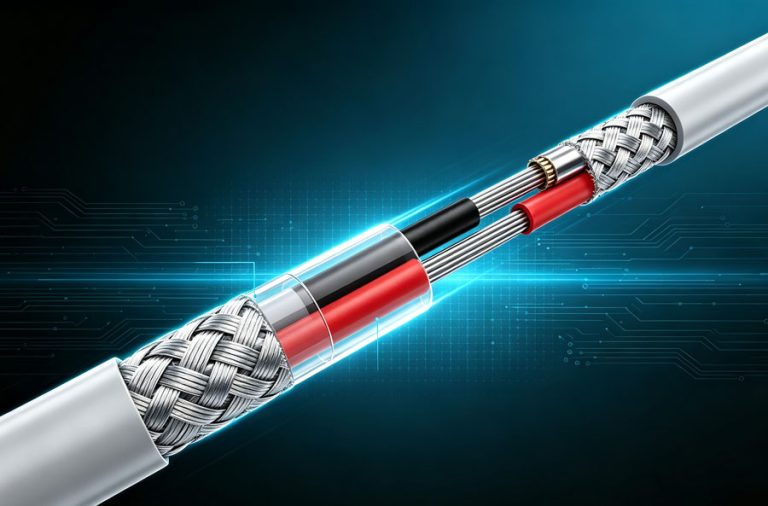
Shielded cables use conductive shielding structures to help manage electromagnetic interference. Depending on the cable design, shielding may use foil, braid, spiral shielding, or combinations of these structures.
However, shielding alone does not guarantee perfect signal performance. Proper grounding, routing, termination, connector selection, cable separation, and installation practices are also important.
For industrial systems carrying sensitive signals, engineers should therefore evaluate the complete cable and installation system rather than focusing on shielding as an isolated feature.
Matching Cables to the Industrial Environment
The physical environment should always be part of the selection process.
A cable installed inside a clean control cabinet may face relatively mild conditions. A cable routed through a manufacturing area may encounter oil, coolant, vibration, dust, mechanical movement, and temperature fluctuations.
Before selecting a product, ask several practical questions:
Where will the cable be installed?
Will it remain stationary or move continuously?
Will it be exposed to oil or chemicals?
Is moisture present?
Could the cable experience abrasion?
Will it be exposed to direct heat?
Are there motors or other sources of electromagnetic interference nearby?
Does the installation require a specific UL designation?
Will the cable be installed in a confined space with limited ventilation?
These questions help establish the real operating environment and narrow the selection to appropriate cable constructions.
Voltage and Current Requirements
Electrical performance remains fundamental, even when environmental requirements receive most of the attention.
Cable selection should account for the system voltage, expected current, conductor size, allowable temperature rise, installation conditions, and applicable electrical requirements.
A cable’s ampacity can be influenced by several factors, including ambient temperature, conductor material, insulation temperature rating, number of loaded conductors, installation method, and surrounding equipment.
For higher-temperature environments, engineers should pay particular attention to how ambient heat affects conductor operating temperature and allowable current.
Using a cable with a higher temperature rating does not automatically mean that every installation can operate at unlimited current. The complete electrical design still needs to be evaluated according to applicable requirements.
Why Cable Flexibility Matters
Flexibility is an important characteristic for moving machinery.
In applications such as robotic arms, automated assembly systems, CNC equipment, drag chains, and moving machine components, cables may bend thousands or millions of times during their service life.
Cable flexibility depends on factors such as conductor stranding, insulation construction, shielding, jacket material, cable diameter, and overall design.
For fixed installations, flexibility may be less important. For dynamic applications, however, selecting a cable designed for repeated movement can be essential.
Installation should also respect the manufacturer’s recommended minimum bend radius. Excessive bending can place unnecessary stress on the cable and potentially reduce its expected service life.
Chemical, Oil, and Abrasion Resistance
Industrial environments frequently expose cables to substances that are not present in ordinary commercial buildings.
Machine oils, hydraulic fluids, coolants, cleaning agents, solvents, and other chemicals can interact differently with different jacket materials.
Mechanical abrasion is another concern. Cables routed near moving machinery may rub against surfaces, while cables installed in industrial pathways may encounter vibration or repeated movement.
If chemical or mechanical exposure is expected, the cable jacket should be evaluated specifically for that environment.
A cable that has excellent electrical properties may still be unsuitable if its external jacket cannot withstand the surrounding conditions.
Choosing the Right Cable Distributor
Selecting a capable cable distributor can simplify the procurement process, particularly when projects require multiple cable specifications.
A specialized distributor should be able to provide clear information about product construction, applicable standards, temperature ratings, voltage ratings, available sizes, jacket materials, shielding options, and application suitability.
For industrial purchasing teams, useful distributor capabilities include:
- Broad product selection
- Clear technical specifications
- UL-related documentation where applicable
- Specialty and high-temperature cable availability
- Multiple conductor sizes
- Custom cable options when required
- Responsive technical support
- Reliable inventory information
- Consistent product quality
- Efficient order fulfillment
Working with a distributor familiar with industrial cable applications can also make it easier to identify alternatives when a particular cable construction is unavailable or when project specifications change.
How to Compare Cable Options
When several cable products appear suitable, creating a technical comparison can help simplify the decision.
Start by comparing the basic electrical specifications, including voltage and conductor size. Then evaluate temperature rating, insulation material, jacket construction, flexibility, shielding, environmental resistance, certifications, and intended application.
A useful comparison may include:
| Selection Factor | Key Question |
|---|---|
| Voltage Rating | Does the cable meet system voltage requirements? |
| Temperature Rating | Can it operate safely at the expected temperature? |
| Conductor | Is the conductor size and construction appropriate? |
| Insulation | Does the insulation suit the electrical and environmental conditions? |
| Jacket | Can the jacket withstand the installation environment? |
| Flexibility | Is the cable designed for stationary or dynamic use? |
| Shielding | Is protection against electrical interference required? |
| Certification | Does the cable meet the specified industry requirements? |
| Bend Radius | Can it be installed within the available space? |
| Application | Is the cable specifically designed for the intended use? |
This approach makes cable selection more objective and easier to document.
Avoid Choosing a Cable Based Only on Price
Initial purchase price is important, but it should not be the only consideration for industrial cable procurement.
A cable that costs less initially may not provide the combination of environmental resistance, flexibility, temperature performance, or certification required for the application.
The more useful question is whether the cable provides the required performance at an appropriate total cost.
Total cost may include:
- Purchase price
- Installation labor
- Maintenance
- Replacement frequency
- Downtime risk
- Inventory requirements
- Compatibility with existing equipment
- Engineering and testing costs
For critical industrial systems, choosing the appropriate cable construction from the beginning can help support more predictable operation and maintenance.
The Importance of Proper Installation
Even a high-quality cable needs proper installation.
Installation teams should follow the manufacturer’s specifications regarding bend radius, pulling tension, routing, termination, temperature limitations, shielding, grounding, and mechanical protection.
For dynamic cables, cable routing and movement management are particularly important. A cable designed for continuous flexing may still experience unnecessary stress if it is installed with excessive tension or an unsuitable bend radius.
Similarly, shielded cables require appropriate grounding and termination practices to achieve the intended performance.
Cable installation should therefore be considered part of the overall system design rather than an afterthought.
Supporting Long-Term Industrial Performance
Industrial equipment is often expected to operate for years, sometimes under continuous production schedules. Cable performance therefore contributes to overall system reliability.
The right cable can support stable power transmission, dependable control signals, efficient machine operation, and predictable maintenance requirements.
For equipment exposed to heat, chemicals, mechanical movement, or other demanding conditions, specialized cable construction provides an additional level of performance compared with general-purpose products.
This is particularly valuable in industries where equipment downtime can interrupt production schedules or increase maintenance costs.
Why Specialty, UL-Standard, and High-Temperature Cables Belong in Modern Industrial Projects
There is no universal cable that is ideal for every industrial application.
Specialty cables address specific electrical, mechanical, and environmental challenges. UL-standard cables help projects meet applicable safety and certification requirements when those standards are specified. High-temperature cables provide cable construction suited to elevated-temperature environments.
In many projects, these categories can overlap. A single cable may combine specialty construction, a UL-related certification or designation, and high-temperature performance.
The goal is not simply to choose the most advanced cable available. Instead, the objective is to select the cable whose construction and specifications most closely match the actual application.
Final Considerations for Cable Buyers
Before placing an industrial cable order, it is useful to prepare a complete specification sheet covering the application’s electrical and environmental requirements.
Confirm the required voltage, conductor size, temperature range, flexibility, shielding, jacket characteristics, installation method, applicable standards, and expected operating conditions.
For projects with unusual requirements, providing the distributor or manufacturer with detailed application information can also improve product matching.
A professional distributor specializing in specialty, UL-standard, and high-temperature cables can help industrial customers navigate these specifications and identify suitable cable solutions for different applications.
As industrial equipment becomes more automated, compact, and performance-oriented, cable technology will continue to play an important role in system reliability. Choosing cables according to real operating conditions—not simply price or appearance—helps create electrical systems that are better suited to demanding industrial environments.
For manufacturers, contractors, engineers, and equipment builders, the right cable is ultimately an investment in reliable system performance. Whether the project requires flexible automation cable, UL-standard cable, shielded control cable, or high-temperature cable, careful specification and professional sourcing can make the selection process more efficient and support long-term industrial operation.