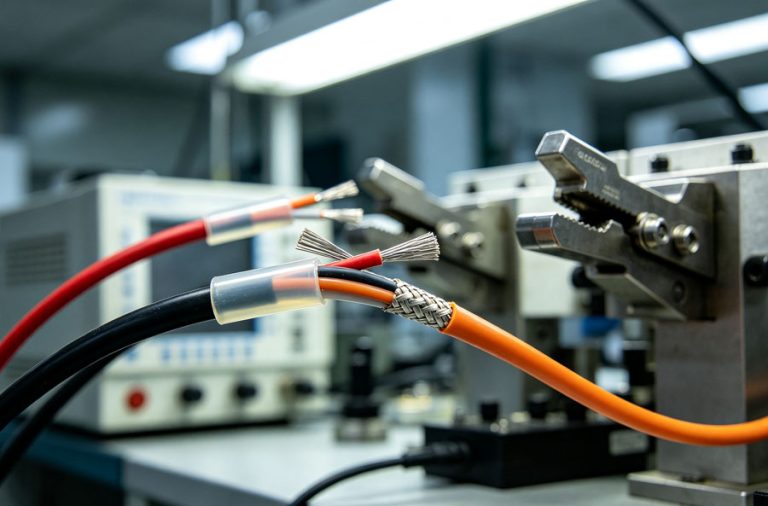

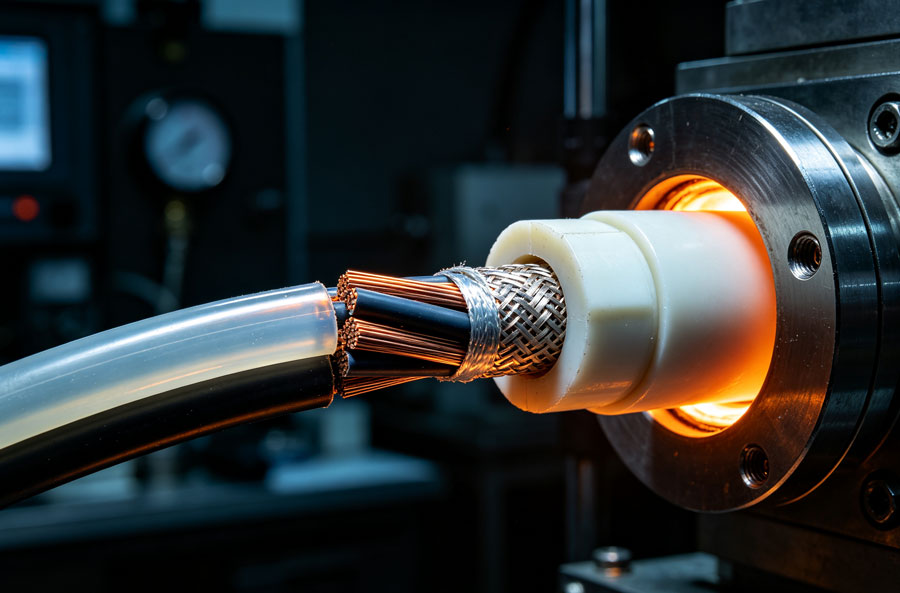
High-temperature cables are essential components in industrial environments where conventional electrical cables may deteriorate when exposed to elevated temperatures, thermal cycling, chemicals, vibration, or continuous mechanical stress. From steel mills and glass manufacturing plants to industrial furnaces, aerospace equipment, energy systems, and advanced automation, electrical and control systems often operate in conditions where reliable cable performance is critical.
Choosing the right high-temperature cable is not simply a matter of selecting a product with the highest temperature rating. The actual operating environment, conductor material, insulation system, flexibility requirements, electrical characteristics, installation method, and exposure to chemicals or mechanical stress must all be considered.
This guide explains how high-temperature cables are designed, where they are used, what characteristics matter most, and how industrial users can select a suitable cable for demanding applications.
What Are High-Temperature Cables?
High-temperature cables are electrical cables engineered to maintain reliable electrical and mechanical performance when exposed to temperatures significantly higher than those tolerated by standard PVC-insulated cables.
Depending on their construction, high-temperature cables can be designed for continuous operation at elevated temperatures and may also withstand short-term exposure to substantially higher temperatures. Their performance depends on the materials used for the conductor, insulation, shielding, jacket, fillers, and other structural components.
Common insulation and protective materials include:
- Silicone rubber
- PTFE and other fluoropolymers
- FEP
- PFA
- Fiberglass
- Mica
- Ceramic-based materials
- Specialized thermoset compounds
Each material provides a different balance of temperature resistance, flexibility, chemical resistance, electrical insulation, abrasion resistance, and installation characteristics.
For example, a flexible silicone-insulated cable may be particularly useful where repeated movement and high ambient temperatures occur simultaneously. A fluoropolymer-insulated cable may be more appropriate where high temperature is combined with chemical exposure. In extremely demanding thermal environments, cables incorporating fiberglass, mica, or other specialized protective layers may provide additional protection.
Why Temperature Resistance Matters in Industrial Applications
Temperature is one of the most important factors affecting cable service life.
When a cable operates above the temperature range of its insulation system, the insulating material can gradually lose its mechanical and electrical properties. Depending on the material and conditions, prolonged overheating can contribute to hardening, softening, cracking, deformation, reduced dielectric strength, or accelerated aging.
These problems can eventually lead to:
- Insulation breakdown
- Short circuits
- Electrical leakage
- Signal instability
- Unexpected equipment shutdown
- Increased maintenance requirements
- Premature cable replacement
High-temperature cables are designed to slow this deterioration and maintain dependable performance within their specified operating range.
However, a higher temperature rating does not automatically make a cable suitable for every hot environment. A cable installed near a furnace, for instance, may experience radiant heat in addition to ambient air temperature. The actual temperature at the cable surface can therefore be considerably different from the general room temperature.
This is why cable selection should always consider the complete thermal environment rather than relying on a single temperature number.
Key Construction Features of High-Temperature Cables
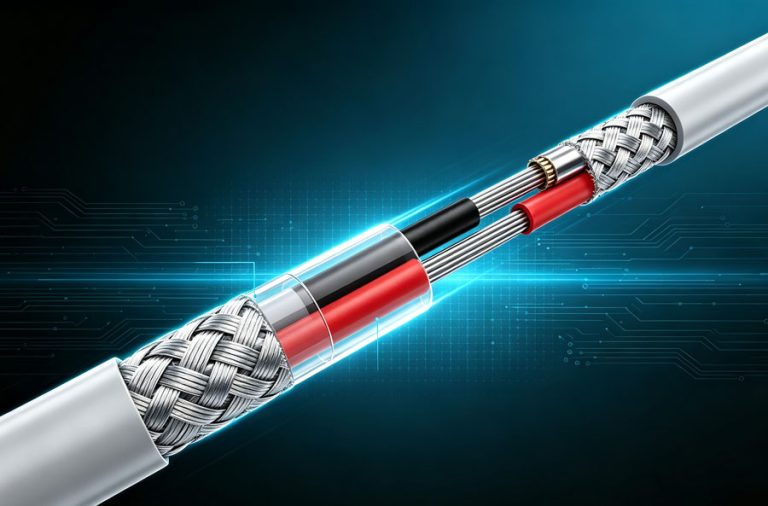
The performance of a high-temperature cable comes from the interaction of several components.
Conductors
Copper is widely used because of its excellent electrical conductivity and practical balance of cost, flexibility, and availability. Depending on the application, conductors may be stranded to improve flexibility.
Nickel-plated or nickel-based conductor constructions may be considered for applications involving elevated temperatures and challenging environmental conditions. The conductor coating can help improve resistance to oxidation and maintain performance in demanding thermal environments.
The appropriate conductor depends on temperature, current, flexibility, installation requirements, and applicable electrical standards.
Insulation
Insulation is one of the most important components of a high-temperature cable.
Silicone rubber is valued for its flexibility and resistance to high temperatures, making it useful in equipment requiring frequent movement or tight installation spaces.
Fluoropolymer insulation such as PTFE, FEP, or PFA offers excellent thermal and chemical resistance and can be particularly useful in industrial environments where cables may encounter oils, solvents, chemicals, or aggressive process conditions.
Fiberglass insulation can provide additional thermal protection in applications involving very high temperatures. However, fiberglass constructions are generally selected based on specific installation conditions rather than simply maximum temperature capability.
Shielding
Industrial equipment frequently produces electromagnetic interference that can affect signal integrity. Shielding can help reduce unwanted electrical noise and improve the reliability of instrumentation, communication, and control circuits.
Common shielding configurations include:
- Braided copper shielding
- Tinned copper braid
- Foil shielding
- Combined foil and braid structures
The appropriate shielding method depends on the signal type, frequency, grounding requirements, mechanical environment, and expected interference level.
Outer Jacket and Protective Layers
The outer jacket protects internal components from mechanical damage, moisture, chemicals, abrasion, and environmental exposure.
In extreme-temperature applications, a conventional jacket may not be sufficient. Specialized high-temperature materials or braided protective layers may be incorporated into the cable construction.
The protection system should match the actual environment. A cable used near a furnace may require thermal protection, while one installed in a moving industrial machine may need greater flexibility and abrasion resistance.
High-Temperature Cable Applications
High-temperature cables are used across a wide range of industrial sectors.
Steel and Metal Processing
Steel mills, foundries, forging facilities, and metal-processing plants contain some of the most demanding thermal environments for electrical systems.
Cables may be installed near furnaces, casting equipment, heating systems, sensors, and automated production lines. They can encounter radiant heat, molten metal splashes, mechanical movement, dust, vibration, and temperature cycling.
Specialized high-temperature cables can help connect sensors, motors, control systems, instrumentation, and other equipment while maintaining reliable electrical performance.
Glass Manufacturing
Glass production involves extremely high process temperatures. Electrical cables used near furnaces and forming equipment must be selected carefully to prevent heat-related deterioration.
Temperature-resistant cables can be used for instrumentation, thermocouples, control systems, sensors, and equipment positioned near heat-intensive processes.
Cable routing is particularly important in these environments because even a high-temperature cable has a defined operating limit.
Industrial Furnaces and Ovens
Industrial ovens, heat-treatment systems, drying equipment, and furnaces require reliable electrical connections for heaters, sensors, controllers, motors, and monitoring systems.
High-temperature cables can be used where standard industrial cables would experience excessive thermal stress.
For these applications, users should consider not only continuous temperature but also peak temperature, heating and cooling cycles, and the distance between the cable and heat source.
Aerospace and Defense Equipment
Aerospace systems can combine elevated temperature with strict requirements for weight, electrical reliability, vibration resistance, and dimensional stability.
High-temperature cables may be used in engine-related systems, thermal protection equipment, sensors, instrumentation, and specialized electronic assemblies.
In these applications, cable selection must be based on the complete engineering specification rather than temperature resistance alone.
Energy and Power Generation
Power-generation equipment can expose cables to heat, vibration, oil, moisture, and electromagnetic interference.
High-temperature cable constructions may be used around turbines, generators, boilers, heating systems, and other high-temperature equipment.
The appropriate design depends on voltage, current, installation location, environmental exposure, and required service life.
Chemical and Process Industries
Chemical processing facilities often require cables that can tolerate both high temperature and aggressive chemicals.
Fluoropolymer-based insulation systems can be particularly useful in environments where chemical resistance is as important as thermal performance.
Users should verify chemical compatibility based on the specific chemical, concentration, exposure duration, temperature, and cable material.
How to Choose the Right High-Temperature Cable
Selecting a cable should begin with the operating conditions rather than the product name.
1. Determine the Actual Temperature
Identify the expected continuous operating temperature and the maximum short-term temperature.
Do not assume that the ambient temperature represents the temperature experienced by the cable. Radiant heat, enclosed spaces, nearby heating elements, and insufficient ventilation can significantly increase cable temperature.
2. Consider Temperature Cycling
A cable exposed to repeated heating and cooling may experience different stresses from a cable maintained at a constant temperature.
Thermal expansion and contraction can affect insulation, protective layers, terminations, and mechanical connections.
Therefore, applications involving frequent thermal cycling should be evaluated separately from steady-state installations.
3. Evaluate Flexibility
Some high-temperature cables are designed primarily for fixed installations, while others are engineered for continuous movement.
If the cable will move with robotic equipment, automated machinery, doors, heating elements, or articulated components, flexibility and bending radius become critical selection criteria.
A cable with excellent temperature resistance may still be unsuitable if its mechanical design cannot withstand repeated bending.
4. Check Electrical Requirements
Temperature performance should never be evaluated independently of electrical specifications.
Important parameters include:
- Rated voltage
- Current-carrying capacity
- Conductor size
- Number of cores
- Insulation resistance
- Dielectric strength
- Signal requirements
- Shielding requirements
Higher ambient temperatures can affect allowable current-carrying capacity, so appropriate derating may be necessary depending on the installation.
5. Assess Chemical Exposure
Industrial cables may encounter oils, fuels, solvents, cleaning agents, acids, alkalis, or process chemicals.
If chemical exposure is expected, verify material compatibility instead of selecting a cable based solely on temperature rating.
Fluoropolymers and other specialized materials may provide advantages in applications requiring both thermal and chemical resistance.
6. Consider Mechanical Conditions
Vibration, abrasion, pulling forces, crushing, bending, and repeated movement can all affect cable service life.
For harsh industrial applications, a cable with suitable mechanical protection may provide better long-term reliability than a cable selected only for its temperature specification.
High-Temperature Cables and Industrial Safety
Cable reliability is closely connected to equipment safety.
An improperly selected cable can experience insulation degradation or excessive heating, increasing the possibility of electrical faults and equipment downtime.
Industrial users should therefore consider recognized electrical and product standards applicable to their region and application. Depending on the cable type and intended market, requirements may involve standards associated with UL, IEC, CSA, or other relevant certification systems.
It is also important to distinguish between a cable being manufactured from a high-temperature material and the complete cable assembly being certified for a particular application.
Certification, conductor construction, insulation system, installation conditions, and temperature rating should all be verified against the actual project requirements.
Installation Best Practices
Even a high-quality high-temperature cable can perform poorly if it is incorrectly installed.
Avoid placing cables unnecessarily close to heat sources. Where direct heat exposure cannot be avoided, appropriate thermal shielding, spacing, or protective structures may be required.
Cable bends should remain within the manufacturer’s recommended minimum bending radius. Excessive bending can damage insulation or internal conductors.
Terminations also deserve particular attention. The cable may tolerate a high temperature while the connector, gland, terminal, or sealing material has a lower temperature limit. The entire connection system must therefore be evaluated.
Cable routing should also account for:
- Heat dissipation
- Mechanical movement
- Vibration
- Abrasion
- Moisture
- Chemical exposure
- Maintenance accessibility
Good installation practices can significantly improve cable service life.
High-Temperature Cables vs Standard Industrial Cables
Standard industrial cables are suitable for many manufacturing and electrical applications, but they are not designed for every thermal environment.
The primary advantage of high-temperature cables is their ability to maintain specified performance under elevated thermal conditions.
However, high-temperature cables can involve specialized materials and more complex construction. Therefore, they should be selected when the application genuinely requires their additional performance characteristics.
For moderate-temperature environments, a conventional industrial cable may provide a more practical solution. For extreme or continuously hot environments, using an appropriately engineered high-temperature cable can reduce the risk of premature insulation failure and unplanned maintenance.
Common Selection Mistakes to Avoid
One common mistake is choosing a cable solely according to its maximum temperature rating.
A cable rated for high temperature may not have the required flexibility, chemical resistance, voltage rating, shielding, or mechanical strength.
Another mistake is ignoring installation temperature. The actual temperature around the cable can be substantially higher than the general facility temperature.
Users should also avoid assuming that all high-temperature insulation materials behave the same way. Silicone, PTFE, FEP, PFA, fiberglass, and other materials have different characteristics.
Finally, cable termination should not be overlooked. The complete cable system must be capable of operating under the intended conditions.
Why Custom Cable Construction Can Be Valuable
Industrial applications do not always fit standard cable configurations.
A project may require a specific conductor size, number of cores, shielding structure, insulation material, jacket construction, temperature rating, flexibility, or certification.
Custom cable construction can allow manufacturers to optimize the cable for the actual application rather than forcing the system to accommodate an unsuitable standard design.
For OEMs, machinery manufacturers, system integrators, and industrial equipment suppliers, customized cable specifications can also help simplify installation and improve consistency across equipment models.
When requesting a custom high-temperature cable, provide as much information as possible, including operating temperature, voltage, current, environment, movement, chemical exposure, installation method, required length, and applicable standards.
Maintenance and Inspection
High-temperature cables should be included in routine industrial maintenance programs.
During inspection, look for visible signs such as:
- Cracked or brittle insulation
- Discoloration
- Deformation
- Abrasion
- Exposed conductors
- Damaged shielding
- Loose terminations
- Signs of overheating
The inspection interval should reflect the severity of the application.
Equipment operating continuously at high temperature or under substantial mechanical stress may require more frequent inspection than equipment operating in a relatively stable environment.
Preventive maintenance can help identify cable degradation before it develops into a larger electrical or production problem.
The Future of High-Temperature Cable Technology
As industrial equipment becomes more automated and energy-intensive, cable systems are expected to operate in increasingly demanding environments.
Manufacturers are continuing to develop insulation materials, protective structures, lightweight constructions, improved shielding systems, and specialized cable assemblies for advanced industrial applications.
The development of smart factories also increases the importance of reliable instrumentation and communication cables. Sensors, automation systems, robotic equipment, and industrial controllers all depend on stable electrical connections.
At the same time, manufacturers are seeking cable designs that balance thermal performance with flexibility, smaller dimensions, longer service life, and easier installation.
Final Considerations
High-temperature cables play an important role in maintaining reliable electrical and control systems in extreme industrial environments. Their value extends beyond simply surviving elevated temperatures. The right cable must provide an appropriate combination of thermal resistance, electrical performance, mechanical durability, chemical compatibility, flexibility, shielding, and installation suitability.
Before purchasing, evaluate the complete operating environment. Determine the actual temperature profile, electrical requirements, movement, chemical exposure, mechanical stress, installation conditions, and applicable standards.
For businesses sourcing high-temperature cables, UL standard cables, and specialized industrial cable solutions, working with an experienced cable supplier can simplify specification and product selection. A knowledgeable supplier should be able to review the application requirements and recommend a construction that matches the operating environment rather than relying on temperature rating alone.
With the correct specification, installation, and maintenance practices, high-temperature cables can provide dependable electrical connectivity in furnaces, manufacturing equipment, energy systems, aerospace applications, process plants, and other environments where ordinary cables may not provide sufficient performance.